Eastern Electricity Board
Harold Wood, Essex - Sep 61 to Jul 62
Student Apprentice
This job was in fact a stop-gap while I was re-taking my A-level Maths. It comprised an endless amount of bench work in which the apprentices had to make themselves a full kit of engineering tools by hand interspersed with a few lectures. There were also sessions of machine shop training and welding. Although I found it boring and unchallenging at the time, I feel in hindsight that it did me a great amount of good by equipping me with a strong sense of practicality and the ability to dive in and make any necessary item I could not otherwise acquire. I later used these skills to make original apparatus for my experiments at the Electrical Research Association.
Electrical Research Association
Leatherhead, Surrey - Aug 66 to July 67
Research Assistant
This was my first job after leaving full-time education. My brief was to assist scientific officers in the electrical research laboratories by building special apparatus, setting it up, calibrating it and taking experimental measurements. The projects on which I worked and completed while there were:
The ERA had an excellent library. It is here that I found many of the 'from the horses mouth' books as I call them by original scientists from which I began what I call my 'real' albeit late mainstream education.
Redifon Flight Simulator Division
Crawley, Sussex - Aug 67 to Feb 70
Programmer
Here, I wrote and implemented software for the simulation of aircraft navigation equipments and their terrestrial environments. During my 2½ years here I completed work on two of Redifon's flight simulators, namely:
- The FSI DC9 for Flight Simulators Inc. of California USA
- The Phantom F4M fighter-bomber for the Royal Air Force
These simulators were essentially the actual front ends of the aircraft concerned mounted on hydraulic motion platforms with all their instrumentation and controls wired to the Honeywell DDP124 control computers via a vast analogue/digital interface containing synchro, servo, resolver and logic channels. The particular sub-systems which I dealt with were compass, gyro platforms, radio aids (NDB, VOR, DME, TACAN, ILS, GCA) and flight directors. I also handled flight instructor aids such as the large area track recorder (a 4 x 6 foot resolver-driven X-Y plotter).
I adapted existing generic programs for such things as the spherical geometry routines for earth navigation, but designed and programmed from scratch simulations of the equipments specific to the model of aircraft concerned. During my work, I discovered mathematically a phenomenon which the existing generic software did not account for. This I later discovered from the client was known as 'Earth-rate Drift' which I then implemented in the generic software.
I did most of my programming at my desk, but the long commissioning process involved much shift work on the simulators on the shop floor for which I had the constant and welcome help of my two stalwart test and calibration engineers, Robbie Allen and Roger Privett.
Scientific Control Systems Ltd (Scicon)
Sanderson House, Berners Street, London W1 - Feb 70 to Sep 71
Analyst/Programmer
During the 18 months I worked here, I produced and delivered:
- A Classified Survey of Minicomputers in the Western World
- A Friendly overview of a heavy Board of Trade Technical Specification
- Overview documentation of a Flight Plan Processing System
- An Introductory lecture to new staff for the above project
The job was based at well appointed offices in the West End of London to which I commuted by train from my home near Gatwick Airport. However, much of my time here involved long strenuous periods of commuting by car to the client's site in Chelmsford and the London Air Traffic Control Centre at West Drayton.
ITT Europe
Technical Publications Centre
Frogmore Hall, Watton-at-Stone, Hertfordshire - Aug 71 to Aug 76
Technical Author
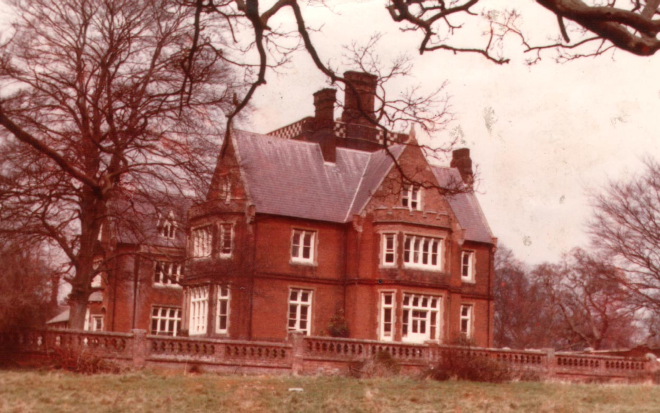
My first task here was to specify a computer Text Processing system for the Technical Authors at the centre. I then produced a slide presentation for the next technical director's meeting at ITT Europe in Brussels to help my manager acquire the funding. In the years that followed I went on to write user manuals and system descriptions for many telephony-related products including the:
These projects involved frequent trips to client ITT System Houses in Antwerp, Brussels, Stuttgart and Paris to gather input which was then brought back to the UK for authoring into formal documentation.
Parent Document |
©Apr 1994 Robert John Morton